What Is an Edelweiss… and Why Are We So Obsessed With It?
I love edelweiss. Truly.
And if you’re German, Austrian, Swiss… or raised by someone who gets misty talking about die Heimat… you probably do too.
But let’s address the obvious.
The edelweiss flower is not exactly a showstopper. It’s fuzzy. Pale. Slightly scruffy. It looks like it survived a blizzard and decided that was its personality.
So why do we love edelweiss so much that we wear it, tattoo it, embroider it, and encase it in glass like it’s sacred? SHOP EDELWEISS!
Because it’s never been about the looks.

What Is an Edelweiss?
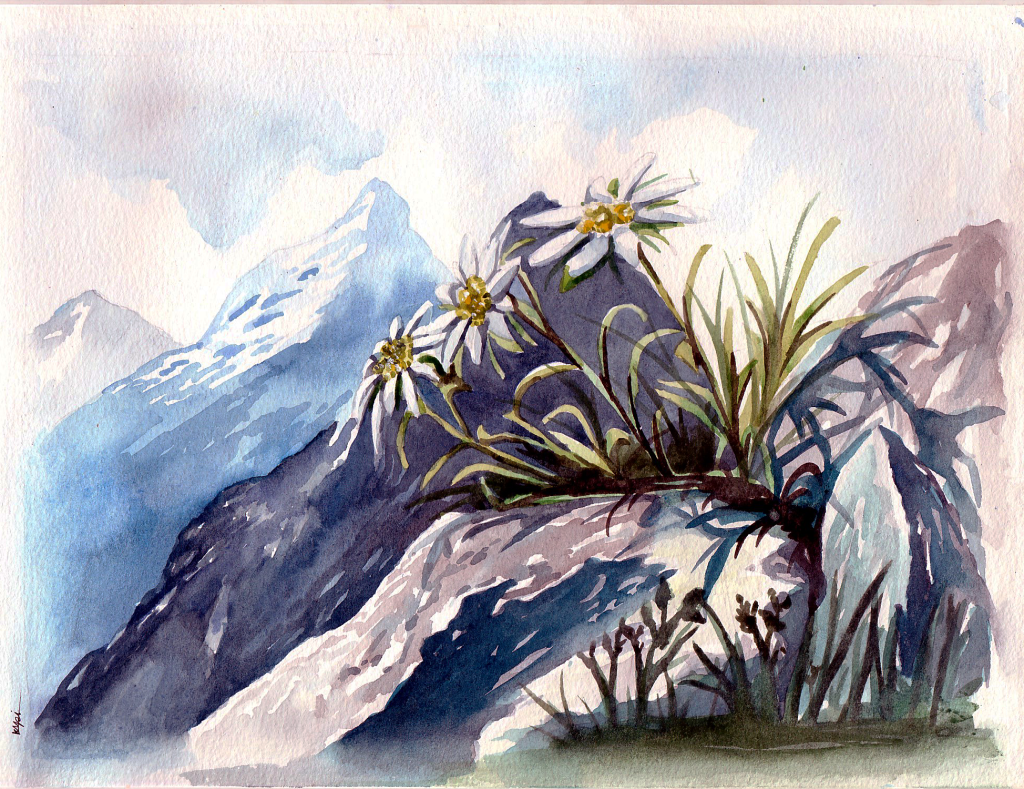
The edelweiss flower, officially known as Leontopodium alpinum, belongs to the daisy or sunflower family Asteraceae. But unlike your sweet little backyard daisy, edelweiss grows high in the Alpine mountains.
We’re talking rocky limestone cliffs, wind, cold, drama. She's a whole vibe this one.
Edelweiss thrives at elevations between 1,800 and 3,000 meters. It survives in conditions that would wipe out most other flowers. That alone makes it feel symbolic.
Historically, this charming plant was used in traditional medicine for abdominal and respiratory issues. It’s non-toxic, hardy, and built for extreme environments.
Basically… she’s not delicate. She’s resilient.
Why Is Edelweiss a Symbol of the Alps?
This white blossom became the symbol of Alpine regions because of where it grows and how hard it is to reach.
In old folklore, a man would climb dangerous mountain cliffs to pick an edelweiss flower for someone he loved. Giving edelweiss wasn’t a casual gesture. It meant dedication. Effort. Risk.
Romance used to require actual hiking... not just a text message and a mediocre meal.
Because of this, the edelweiss flower became associated with rugged beauty, purity, devotion, and national pride across Austria, Switzerland, southern Germany/ Bavaria, Slovenia, Bulgaria and beyond. It represents mountain culture in the most literal way.

Edelweiss and the Meaning of Home
During World War I and World War II, Alpine soldiers often carried a sprig of edelweiss with them as a reminder of home. Many received it from a sister, mother, or sweetheart before leaving.
The edelweiss flower became a quiet symbol of die Heimat… of mountains, family, and belonging.
And toward the end of WWII, the Edelweiss Pirates adopted the flower as a symbol of youth resistance against the Nazi regime. These working-class teens rejected conformity and wore edelweiss as a sign of defiance.
So this “little fuzzy flower” also carries history tied to bravery and rebellion. Not bad for something that looks like a daisy after a real rough day having just rolled in flour.

The Sound of Music and Edelweiss
If you grew up outside the Alps, chances are you first heard about edelweiss in The Sound of Music. That movie we had to watch on every German club bus trip... every, single, one. lol
The song “Edelweiss” made the flower internationally famous, even though it was written for the musical and is not a traditional Austrian folk song.
And when Lady Gaga performed “Edelweiss” at the 2015 Grammys, she gave the flower a whole new moment... because of course she did!
The edelweiss keeps reinventing itself without ever changing.

What Does the Edelweiss Flower Actually Look Like?
Botanically speaking, the edelweiss is small, about six inches tall, with woolly white velvety bracts surrounding clusters of tiny yellow florets. The silvery tone protects it from harsh sun and cold temperatures.
It’s a perennial plant, meaning it returns year after year, but it must reseed itself to survive. If people continually pick the flowers from the same plant, it will eventually die.
Which is why many Alpine regions now protect wild edelweiss. At one point, over-picking by tourists nearly caused serious decline. Today, it’s no longer considered endangered, but the rule still stands.
Look... but no touchy touchy
Where Did Edelweiss Come From?
While we associate edelweiss with the Alps, its ancient origins trace back to the high plateaus of the Himalayas and Siberia. It migrated to Europe during the ice ages.
So technically, edelweiss has been traveling long before any of us.

Edelweiss in Traditional Dirndl and Tracht
If you’ve ever worn a dirndl, you’ve likely worn edelweiss without even thinking about it.
Edelweiss embroidery appears on bodices, aprons, trims, jewelry, and hair accessories across traditional Tracht. The stylized five-point shape is instantly recognizable in Alpine design.
Why? Because edelweiss communicates heritage without words.
It says:
- Alpine roots
- Cultural pride
- Connection to tradition
And here’s the thing… edelweiss works beautifully in design. The real flower is fuzzy and subtle. But illustrated edelweiss? Clean lines. Balanced symmetry. Iconic shape.
That’s why it translates so well into silver charms, embroidered motifs, and dirndl detailing. It’s minimal. But meaningful.

Edelweiss and German-American Identity
For German-Americans especially, edelweiss carries layered meaning.
Many families came to the United States in the late 1800s and early-mid 1900s. They brought recipes. Dialects. Stories. And symbols.
Edelweiss survived as one of those symbols.
It shows up at Oktoberfest celebrations, on traditional dance costumes, and in family heirlooms. It bridges continents. When we wear edelweiss today, we aren’t pretending to live in the Alps. We’re honoring where our people came from.
That’s different.


Why We Still Adore the Edelweiss
We don’t love edelweiss because it’s glamorous.
We love edelweiss because it represents heritage and home. For German-American families especially, the edelweiss flower bridges continents. It’s a reminder of where our stories started.
It shows up on dirndls, jewelry, hair clips, and family crests because it carries meaning. It represents resilience, devotion, mountain strength & identity.
And honestly… it also looks amazing embroidered.
The real edelweiss might not win a beauty contest. But its symbolism outweighs its aesthetics. That’s why we keep wearing it.

Do you love edelweiss as much as I do? Do you have a family connection to the edelweiss flower?
Tell me your story.
-
Ever wonder which dirndl style you are? Click here to take out quiz and find out now!

Comments
Sandy Bean said:
My father-in-law brought paper flowers back from WWII. They are white and a straight pin with a red circle in the middle and on the circle is the word Ja!. Can anyone identify these. I think it is an edelweiss. Thank you.