Can I Wear a Traditional Dirndl if I’m Not German?
This question comes up a lot. And not in a casual, "hey quick thing" way. It usually comes wrapped in anxiety, guilt, or a Facebook comment section on fire.
Someone once asked in the Rare Dirndl Facebook group:
"Is anyone offended if a non-German wears a dirndl? I shared a link in a fashion group and the topic of cultural appropriation came up. So... can anyone wear a traditional dirndl if they're not German? Is it offensive? Is Oktoberfest different because everyone's German for a day?"
So let's talk about it. Honestly. Without pretending this is a simple yes or no.
Short answer first: Yes, you can wear a dirndl even if you are not German.
Long answer: It depends on how and why you wear it.

Why This Question Even Exists
A traditional dirndl is not random fashion. It has history. It has meaning. It comes from real people, real places, and real lives.
The dirndl originated as everyday clothing for women in rural Alpine regions, especially Bavaria and Austria. It was workwear first. Practical. Durable. Regional. Over time, it evolved into something more decorative, more celebratory, and more symbolic.
Because of that history, people are understandably protective of it. Especially those whose families wore tracht long before it became something sold on Amazon with the words "beer girl" slapped on the tag.
So when someone outside the culture asks if they can wear a dirndl, the concern is not about exclusion. It is about respect.
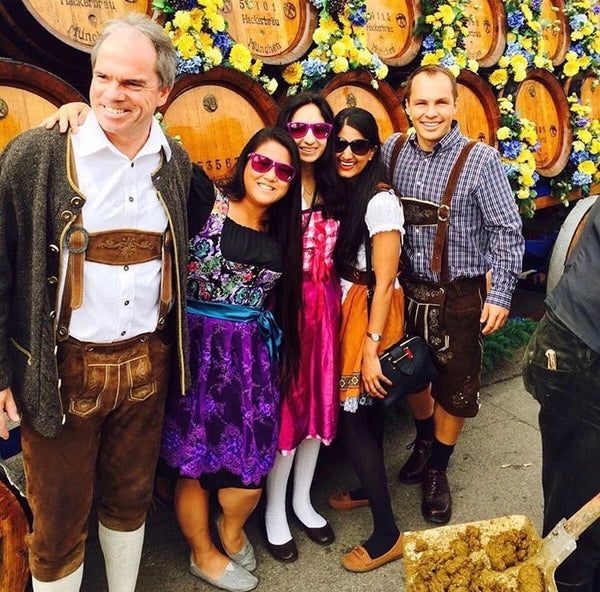
Cultural Appreciation vs Cultural Appropriation
Let's get this straight because this is where things usually go sideways.
Cultural appreciation means:
- You wear a dirndl because you admire the culture
- You care about quality, fit, and context
- You are not turning it into a joke
- You are not mocking the people who wear it as part of their heritage
Cultural appropriation means:
- You treat it like a costume
- You exaggerate stereotypes
- You strip it of meaning for laughs or shock value
- You reduce an entire culture to cleavage and pigtails
The line is not blurry. People just like to pretend it is.
Just wear it with respect.

What the German Community Actually Thinks
When this topic came up in the Rare Dirndl Facebook group, the responses were thoughtful, grounded, and very consistent.
Here were the main takeaways:
- If the dirndl is authentic and the event is appropriate, wear it
- Do not outshine the host or the culture you are stepping into
- Traditional clothing belongs at cultural events, not random theme parties
- Respect matters more than ancestry
No one said you need a DNA test to put one on. That idea is ridiculous.
Traditional and regionally specific tracht tends to hold a lot more meaning than your average dirndl, and those who are from that region are often more protective of those garments. But who are they to judge where you are from if you're wearing it respectfully? (See The Deeper Meaning Behind Wearing a Dirndl for my full article on this topic and its history.)

Do You Have to Be German to Wear a Dirndl?
No. Full stop.
You do not need German blood, a German last name, or a family tree that traces back to Bavaria.
What you do need is:
- Awareness of the setting
- A basic understanding of what you are wearing
- A willingness to not make it stupid
That is it.
A dirndl is not a private club uniform. It is cultural clothing that has always evolved, traveled, and adapted.

When Wearing a Traditional Dirndl Makes Sense
There are many situations where wearing a traditional dirndl is completely appropriate, even if you are not German.
Examples:
- Oktoberfest celebrations
- German club events
- Folk festivals
- Cultural weddings
- Heritage celebrations
- Travel in Alpine regions
- Themed events hosted by German organizations
If you are invited, welcomed, or participating respectfully, you are fine.

When Wearing a Dirndl Is Not OK
Let's be very clear here.
Wearing a dirndl is not okay when it becomes a joke.
Not okay examples:
- A dirndl so short you need bloomers just to exist
- Anything sold as "Beer Wench"
- Party City "dirndls" in plastic bags
- Cheap costume sets designed to sexualize the outfit
- Wearing one to mock the culture or play into tired stereotypes (this goes for lederhosen too)
The moment it turns into a parody, you crossed the line.
A dirndl is not a sexy Halloween costume. And no, slapping the word "German" on it does not fix that.

Why the "Sexy Beer Girl" Costume Is a Problem
Let me spell this out plainly.
- It is not a dirndl
- It looks like you are making fun of German women
It reduces women to props. It suggests the culture exists for consumption and gawking. It also ignores the fact that large parts of Germany do not wear dirndls at all.
And yes, if you wear that to a festival where people are wearing real traditional dirndls, you will make people uncomfortable.
Bedroom role play? Do your thing. Halloween? Fine.
A folk festival or Oktoberfest? Hard no.

What's Included in a German Dirndl
A dirndl is not one single piece. It's a full outfit made up of several parts that work together. The core is the dirndl dress, which includes the bodice and skirt.
Underneath, you wear a dirndl blouse, typically cropped with short or elbow-length sleeves.
Over the dress goes the dirndl apron, which is both decorative and traditional.
Dirndl socks or stockings are standard and help ground the look. Some women choose to add a petticoat for extra fullness, while bloomers can be worn underneath for comfort and coverage. Each piece serves a purpose, which is why a real dirndl looks intentional and not like a costume.

Regional Tracht vs Everyday Dirndls
Not all traditional clothing carries the same weight.
Region-specific tracht often has deep local meaning. Certain colors, cuts, and details can signal where someone is from, their community, or their family history. People tend to be more protective of those garments.
A traditional dirndl, while still meaningful, is more widely worn and more adaptable. That is why you see such variation today in length, color, and styling.
No one is standing at the gate checking your passport.

My Perspective as a Designer and German American
I am of Donauschwaben descent. My connection to German culture is personal, lived, and ongoing.
If I see someone who is not German wearing a dirndl respectfully, I do not get offended. Not even a little.
If I see someone acting like an idiot while wearing one, that is different. That is not about heritage. That is about behavior.
You represent the culture when you wear its clothing. That is the responsibility. Not your ancestry.

How to Wear a German Dirndl Respectfully
If you want a simple checklist, here it is:
- Choose a well-made dirndl
- Skip novelty costumes
- Match the outfit to the event
- Learn the basics of how it is worn
- Do not sexualize it for laughs
- When in doubt, ask the host
There is nothing wrong with curiosity. Learning is part of appreciation. And if you want more information on the proper way to wear a dirndl, check out our blog post How To Wear A Dirndl.

Modern Dirndls and Personal Style
Today's dirndls come in a huge range of styles. Traditional. Modern. Minimal. Bold. Bridal. Casual. Even sporty.
They can be:
- A wedding dress
- A bridesmaid dress
- A festival outfit
- A statement piece
- A way to honor heritage that is not your own
A German dirndl can absolutely reflect your personality while still honoring where it comes from.

So... Can You Wear a Dirndl if You're Not German?
Yes. Hell yes.
Wear it because you admire it. Wear it because it makes you feel confident. Wear it because you were invited into the space where it belongs.
Do not wear it to mock. Do not wear it as a punchline.
Respect is the difference. Always.
If you are thinking, "I am not German. Should I wear this dirndl?" the answer is usually simple.
Yes. Wear it. Just do it right.

FAQs
Is it cultural appropriation to wear a dirndl?
Usually, no. Wearing a dirndl becomes cultural appropriation when the outfit is treated like a joke or a costume. If you are wearing a well-made dirndl to a cultural event, festival, or celebration and you are respectful of the tradition, most people see that as cultural appreciation, not appropriation. Problems usually happen when people wear cheap "beer girl" costumes or exaggerate stereotypes.
Can Americans wear dirndls to Oktoberfest?
Yes. You will see people from all over the world wearing dirndls and lederhosen at Oktoberfest in Munich. The key is wearing real tracht or a well-made dirndl, not a Halloween costume version. Locals generally appreciate when visitors make the effort to participate respectfully.
Is it disrespectful to wear a dirndl if you're not German?
No. You do not need German ancestry to wear a dirndl. What matters more is how you wear it and where you wear it. If you're attending a German cultural event, festival, wedding, or Oktoberfest celebration, wearing a dirndl is often encouraged. Respect and context matter far more than your last name.
What is the difference between a dirndl and a costume?
A real dirndl is a traditional dress with a specific structure. It includes:
- a fitted bodice
- a blouse worn underneath
- a full skirt
- a separate apron
Costume versions usually skip these details and exaggerate the outfit to look overly sexualized or cartoonish. If it came in a plastic bag labeled "beer wench," it's probably not a dirndl.
Do Germans get offended when tourists wear dirndls?
Most Germans are not offended when tourists wear dirndls respectfully. In fact, many locals appreciate when visitors participate in the culture rather than treating the festival like a random costume party. Where people tend to get annoyed is when the outfit becomes a parody or when stereotypes are pushed for laughs.
Can you wear a dirndl outside of Oktoberfest?
Yes. Dirndls are worn at many events including German cultural festivals, folk events, weddings, Christmas markets, and heritage celebrations. Some people even wear modern dirndls as special occasion dresses.
Do you have to be Bavarian to wear a dirndl?
No. Even within Germany, dirndls are worn by people who are not Bavarian. The garment has spread far beyond its original Alpine regions. Regional tracht tied to specific villages or traditions tends to carry deeper meaning, but the everyday dirndl has become much more widely worn.
Is it okay to wear a dirndl to a themed party?
It depends on the tone of the party. If the event is celebrating German culture or Oktoberfest, a real dirndl can make sense. If the event turns the outfit into a joke or pushes stereotypes, that is where things start to feel disrespectful.

So. Thoughts? Drop them in the comments. I am genuinely curious.
–
Ever wonder which dirndl style you are? Click here to take our quiz and find out now!
Comments
Gretchen van der Lyke said:
Fascinated by this question. Thus far in life I have not worn dirndl . This is mainly because they are expensive. Also, I don’t go to many social events. I happen to look very good in Austrian sweaters, like Geiger. Because of my name, many people think I’m probably German, though in actuality I’m a mix of Masovian, Polish on my mothers side, and American Yankee, derived from the British isles on my fathers. Nonetheless because many people think I’m German, I have studied the language, and learned a general overview of its history. Like myself, I think it’s an identity in search of itself. In the middle of Europe it has Saxon, Celtic and Slavic roots, just like I do.
Sahana Kulur said:
Very thoughtful words! I second all your words, especially “Why is wearing a “Sexy German Beer Girl” costume not OK? #1 – Because it’s not a dirndl and #2 – Because it looks like you’re making fun of us.” There is always a difference between mocking someone’s culture and embracing it. Thanks for the write up.