
How to Grow Edelweiss at Home: Tips, Tricks, and Planting Advice
Can you grow edelweiss at home?
Turns out... maybe, if you know what you're doing.
I am absolutely not an edelweiss expert, so I asked someone who actually knows his dirt from his compost. My longtime friend Farmer Dan Pilguy of Arlington Crest Farms shared his advice for growing this iconic Alpine flower at home, including what kind of soil it likes, how to start the seeds, and why patience matters.


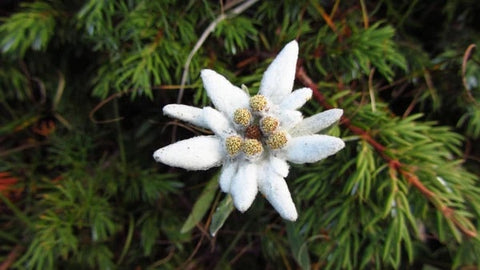
Edelweiss (Leontopodium alpinum) is a perennial alpine flower and herb native to Germany, Switzerland, France, and many alpine countries, where it is observed as a protected flower. It has white flower heads with clumped yellow florets in the center, accompanied by felt-textured leaves that are silvery-green in color. These plants tend to grow in mountainous regions.
Common in much of European folklore, edelweiss plants have medicinal properties that are still being researched. Some cultures believe edelweiss contains anti-cancer properties, and its known biological activities are shared with other medicinal herbs such as Echinacea and Mugwort. Their shared flavonoid chemistry has effective uses for inflammation and gastrointestinal pain.

Expert Tips for Growing Edelweiss at Home
I am probably the farthest from an edelweiss plant expert as it comes, so I reached out to my pal Farmer Dan for advice. We grew up together in the American Aid Society of German Descendants German Club, and he is a wealth of knowledge when it comes to anything involving plants, dirt, and veggies. I asked him if he had some tips, tricks, and hacks for growing edelweiss at home. Will this Alpine beauty even grow here? Let's find out!

If you want to plant edelweiss, it's rewarding, but it takes time. Starting and raising the seeds takes about two months under controlled conditions. It is suggested to keep the seeds inside the refrigerator for three weeks in darkness, followed by two weeks at around 55°F. The idea is to replicate the cold temperatures where edelweiss naturally grows, creating the natural thawing of alpine permafrost.
If you have an abundance of seeds, I would only recommend trying a few this way. Trust me, starting medicinal herbs indoors is not as fun as it sounds.
Because germination rates are not the best, I suggest sprinkling 25–50 seeds in each pot. Use gallon clay pots with drainage holes. Lightly top-dress the seeds with about ¼ inch of soil and keep the surface moist with a spray bottle daily until germination.

If using a hose, make sure it has a mist setting. High-pressure watering will definitely disrupt the surface and risk lower germination rates or the loss of edelweiss seeds. You want to make sure the seeds stay consistently moist without overwatering. Place the potted edelweiss somewhere you pass frequently so you don't forget to water them. Patience is key because germination may take up to two weeks.
Keep kids, house pets, and local critters away at all costs. Also make sure to move containers out of inclement weather like heavy rain or wind storms until seedlings are a few inches tall. This is undoubtedly the hardest part of growing edelweiss flowers, so if you can get through this stage, you're golden.
After the danger of frost has passed (late April or early spring), use the majority of the seeds to broadcast outside in garden pots with rich yet well-draining soil. A good mix is equal parts peat moss, sand, and compost. I like to add a cup of worm compost per 1.5 cubic feet of soil as a base fertilizer for planting edelweiss.
After germination, you can carefully separate individual plants and transplant them into a cool, shaded garden or other containers. I would not grow more than eight plants per pot. In nature, edelweiss thrives in rocky soil at high altitudes, so a steep rock garden may be the perfect destination. Think of an outdoor area you go to cool off when it's super hot out. Kind of like late spring conditions. That's where these mountain flowers will thrive.

by Farmer Dan Pilguy of Arlington Crest Farms
More about Farmer Dan: Palatine, IL native Dan Pilguy is the owner and operator of Arlington Crest Farms. In 2012 he embarked on his farming career by co-founding a startup in rural Iowa with a college classmate, combining their passion to grow fresh organic produce.
In 2014 Farmer Dan established a Community Supported Agriculture base back home in Palatine. With his determination and passion to provide food in the Chicago suburbs, Dan decided to take a leap of faith and transition himself as an Illinois farmer.
Over the course of two years, Farmer Dan, alongside the help and support of his family, friends, and neighbors, developed what is now a 1/2 acre suburban farm. By 2016 Arlington Crest Farms was officially founded with the support of 35 CSA members. He now operates full time in Illinois along with additional land for more crops provided by neighbors. AC Farms also works with Turtle Creek Farm as a produce wholesaler.
Click here to see pictures of how the Pilguy's backyard was transformed into AC Farms.
Check out their Instagram page here

Edelweiss Growing FAQ
Can you grow edelweiss at home?
Yes, you can grow edelweiss at home, but it can be a little fussy. Edelweiss is an alpine plant, so it prefers cooler conditions, well-draining soil, and a bit of patience while getting started.
Is edelweiss hard to grow?
Edelweiss is not impossible to grow, but it is definitely not a "throw it in a pot and hope for the best" kind of plant. The hardest part is usually getting the seeds to germinate and keeping the seedlings alive long enough to transplant.
What kind of soil does edelweiss need?
Edelweiss grows best in well-draining soil. A mix of peat moss, sand, and compost works well. Since it naturally grows in rocky alpine conditions, it does not like heavy, soggy soil.
Does edelweiss need full sun?
Edelweiss likes bright conditions, but in warmer climates it tends to do better in a cooler, partially shaded area rather than blasting sun all day. Think more mountain meadow than frying pan.
Can you grow edelweiss in pots?
Yes. Edelweiss can be grown in pots, especially clay pots with good drainage. Container growing is a smart option if you want more control over the soil and moisture levels.
How long does edelweiss take to grow from seed?
Starting edelweiss from seed can take several weeks, and the full process takes time. Seeds often need a cold period before planting, and germination may take up to two weeks once conditions are right.
Does edelweiss come back every year?
Yes. Edelweiss is a perennial, which means it can come back year after year if planted in the right conditions and survives its first growing season.
Why is edelweiss so famous?
Edelweiss is famous because of its strong connection to the Alps, German and Austrian folklore, and its reputation as a rare mountain flower. It has become a symbol of Alpine beauty, romance, and resilience.
Looking for more German Dirndl Style tips & tricks? Click the link to get access to our official style guide! >> https://bit.ly/dirndlstyle
Ever wonder which German dirndl style you are? Click here to take our quiz and find out now!
Originally published: March 2, 2021
Updated: March 9, 2026
Comments
Juliana said:
Please send me directions for making vermicompost.
Caroline Carley. said:
Hello, I have bought edelweiss small plants as I wish to grow they came today.
Any advice you could give soil etc would be appreciated
Kind regards
Caroline.